
Original price was: $393.00.$99.99Current price is: $99.99.
- Friendly, efficient service, always online.
- Efficiency meets excellence in customer care.
- Quality You Can Trust
- Satisfaction Guaranteed

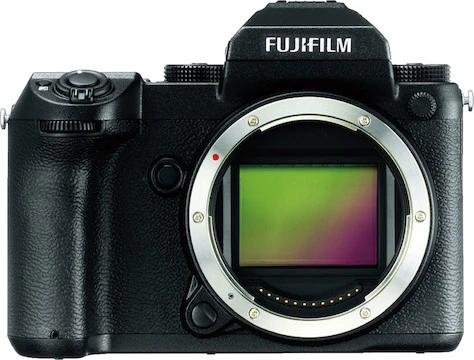
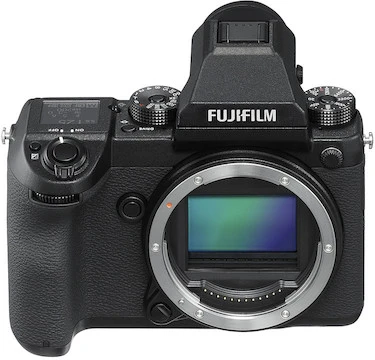
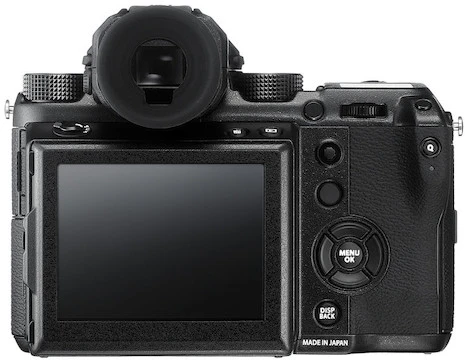
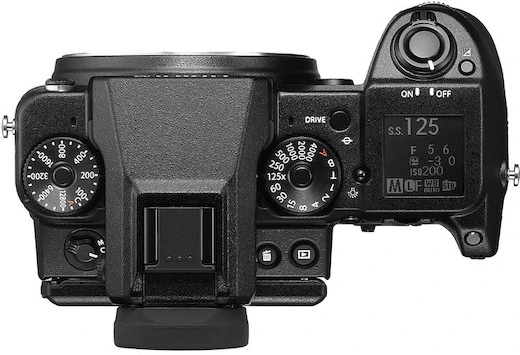
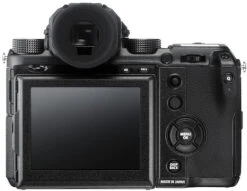
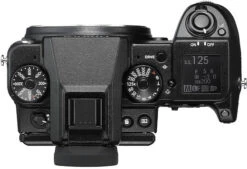
The Fuji GFX 50S Medium Format Mirrorless is the company’s first foray into the digital medium format market. Looking for an alternative to this camera? Check out the . Key features include:
-
51.4MP medium-format mirrorless
-
Multi-aspect ratio
-
Fuji G-mount
-
Detachable EVF
51.4MP Medium Format MIrrorless. The Fuji GFX 50S utilizes a 43.8 × 32.9mm CMOS sensor for superior sharpness and image quality in a relatively compact mirrorless form-factor. The larger-than-full-frame sensor size has a reverse crop factor of 0.79x, so keep that in mind when selecting lenses.
Multi Aspect Ratio. Can be adapted to various aspect ratios, including 4:3 (default), 3:2, 1:1, 4:5, 6:7, and 6:17.
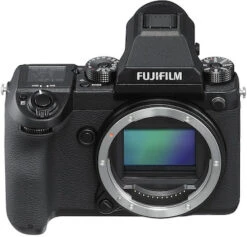
Fuji G-Mount. The larger-medium format sensor requires lenses with a larger image circle, thus was born the G-mount. As it’s designed for mirrorless, the G-mount features a short flange back distance of just 26.7mm. Fuji X-mount lenses are not compatible with the medium format GFX.
X-Processor Pro Imaging Processor. With large amounts of data captured, the GFX needed a powerful processor to handle the load.
Detachable Electronic Viewfinder. The 3.69M-dot OLED electronic viewfinder features 0.85x magnification while offering 100% coverage. Wish the EVF tilted? The optional enables it. If you don’t need the viewfinder, take it off; it’s removable! You can then just use the 3.2-inch, 2.36M-dot tilting, touch-sensitive rear LCD.
Durable Build. The GFX 50S features a weather- and dust-resistant build, operating in temperatures as low as 14º Fahrenheit. The camera has dual SDHC / XC card slots that support UHS-II memory, and the included rechargeable NP-T125 battery is rated for an estimated 400 shots per charge. If you need additional power, we also carry the .
The world of mirrorless medium format is upon us! So far, the Fuji is my favorite option out there. Image quality is spectacular, AF is snappy and flexible, controls are intuitive, and the modulari…
The world of mirrorless medium format is upon us! So far, the Fuji is my favorite option out there. Image quality is spectacular, AF is snappy and flexible, controls are intuitive, and the modularity of the whole system makes it easy to customize to your needs. It’s not super compact and there are no leaf shutter lenses, so if either of those matter to you, the Hasselblad X1D is probably a better fit for you. In every other way I’d recommend the Fuji.
| Brand |
Fuji |
| Camera Type |
Mirrorless |
| Compatibility |
Fuji G, Medium Format, Fuji G, and Medium Format |
| Environmental |
Operating Temperature
Operating Humidity
Battery Type
|
| Exposure Control | Shutter Type
Metering Method
Exposure Modes
Exposure Compensation
Continuous Shooting
Interval Recording
Self-Timer
Aspect Ratio
Image File Format
Bit Depth
Broadcast Output
|
| Flash |
Built-In Flash
Flash Modes
Maximum Sync Speed
Dedicated Flash System
External Flash Connection
|
| Focus | Focus Type
Focus Mode
Autofocus Points
|
| Hood Included |
No |
| Image Stabilization |
No |
| Imaging |
Lens Mount
Sensor Resolution
Image Stabilization
|
| Item Type |
Lens, Camera, and Accessory |
| Memory Card Slot |
Dual Slot: SD/SDHC/SDXC (UHS-II) |
| Monitor | Size
Resolution
Display Type
|
| Mount |
Fuji GFX and Fuji |
| Sensor Size |
Medium Format and Medium Format |
| Shutter Speed |
Mechanical Shutter
Electronic Shutter
Electronic Front Curtain Shutter
|
| Viewfinder | Type
Size
Resolution
Eye Point
Coverage
Magnification
Diopter Adjustment
|
Be the first to review “Fuji GFX 50S Medium Format Mirrorless”
Related products
Accessories


Lighting


Reviews
There are no reviews yet.