
Original price was: $301.00.$96.99Current price is: $96.99.
- Friendly, efficient service, always online.
- Efficiency meets excellence in customer care.
- Quality You Can Trust
- Satisfaction Guaranteed

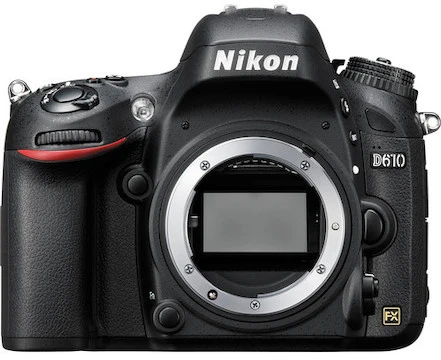
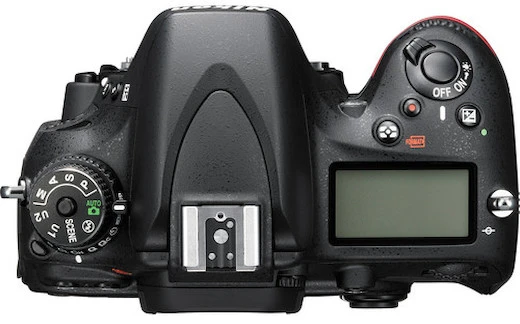
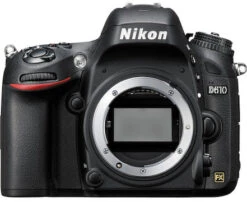
The Nikon D610 is a prosumer-level full-frame DSLR and an update to the D600. Key features include:
-
24.2MP FX CMOS sensor
-
Normal ISO range of 100-6,400, expandable to 50-25,600
-
39-point autofocus system
-
Full HD video capture
Upgrades From D600. The D610 is essentially the D600’s slightly taller twin sibling. Its only “official” differences are a newly designed shutter mechanism that increases maximum frames per second from 5.5 to 6, the addition of a 3 fps quiet continuous mode, and an updated white-balance system. While these are good things to have, this camera was most likely released to resolve the widely reported .
24.3MP FX CMOS Sensor. The full-frame sensor with Nikon’s advanced EXPEED 3 image processor provides high-resolution images with accurate color reproduction, rich tonality, and large dynamic range. It offers very good high ISO performance, with a normal range of 100-6,400 (expandable to 50-25,600).
Multi-CAM 4800 Autofocus Sensor. Using the Nikon D7000’s autofocus system, the D610 gives shooters 39 AF points to select from. It has a 6 fps maximum continuous frame rate with autofocus capability all the way to f/8, making teleconverter users feel right at home.
HD Video. The D610 shoots 1080P full HD at 24, 25, and 30 fps, outputting footage in a friendly .MOV file with h.264 compression. For those who demand higher quality footage, the D610’s HDMI input also provides clean, uncompressed video, allowing the use of a high-end external recorder. Also featured is both a 3.5mm mic input, as well as 3.5mm headphone jack, allowing high-quality audio recording and monitoring while shooting.
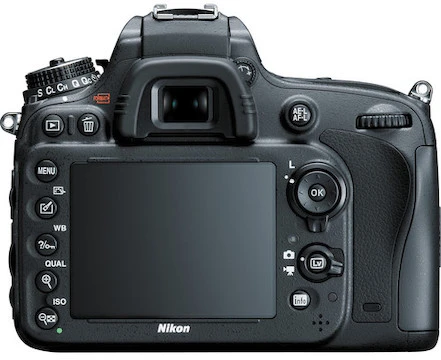
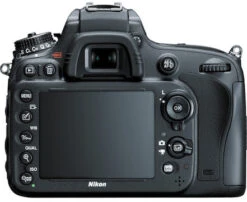
Durable Build. Despite its small size, the D610 sports a lightweight yet rugged magnesium alloy body. The camera features a large viewfinder and still retains a built-in pop-up flash that’s compatible with the Nikon CLS system. The large 3.2″ 921K rear LCD makes image review and live view shooting very visually pleasing. Additionally, there’s a built-in intervalometer enables in-camera time-lapse photography. The camera has two SD memory card slots that are compatible with a wide range of , allowing uninterrupted shooting even after one card fills. The D610 uses the same rechargeable lithium battery as the D7000/D800, and is rated at 900 shots per charge.
What’s there to say about this camera that hasn’t already been said about the D600? Nothing, really. This was Nikon’s answer to that pesky oil-spot problem on their original D600 production run, bu…
What’s there to say about this camera that hasn’t already been said about the D600? Nothing, really. This was Nikon’s answer to that pesky oil-spot problem on their original D600 production run, but they’ll never admit that.
So what’s different? They increased the high-speed burst rate from 5.5 fps to 6 fps, and they gave that relatively useless “Quiet” mode a continuous option. Yep, that’s it. It’s still a great little full-frame camera, though.
| Brand |
Nikon |
| Camera Type |
DSLR |
| Environmental |
Operating Temperature
|
| Exposure Control |
Shutter Type
Shutter Speed – Electronic Front Curtain Shutter
Bulb/Time Mode
ISO Sensitivity
Metering Method
Exposure Modes
Exposure Compensation
Metering Range
White Balance Presets
Interval Recording
Self-Timer
|
| Flash |
Built-In Flash
Flash Modes
Guide Number
Maximum Sync Speed
Flash Compensation
Dedicated Flash System
External Flash Connection
|
| Focusing |
Focus Type
Focus Mode
Autofocus Points
Autofocus Sensitivity
|
| General |
Battery Type
Tripod Mounting Thread
Accessory Mount
Material of Construction
|
| Imaging |
Sensor Resolution
Image Sensor
Image Stabilization
Mirror Lock-Up
Capture Type
|
| Interface |
Media/Memory Card Slot
Video I/O
Audio I/O
Wireless
Global Positioning (GPS, GLONASS, etc.)
|
| Item Type |
Camera |
| Mfr. Model Number |
1540 |
| Monitor |
Size
Resolution
Display Type
Secondary Display
|
| Mount |
Nikon F |
| Sensor Size |
Full Frame |
| Still Image Capture |
Image Sizes
Aspect Ratio
Image File Formats
Bit Depth
IP Streaming
Built-In Microphone Type
Audio Recording
|
| Viewfinder |
Type
Coverage
Magnification
Diopter Adjustment
|
Be the first to review “Nikon D610”
Related products
Flashes

Accessories

Reviews
There are no reviews yet.